

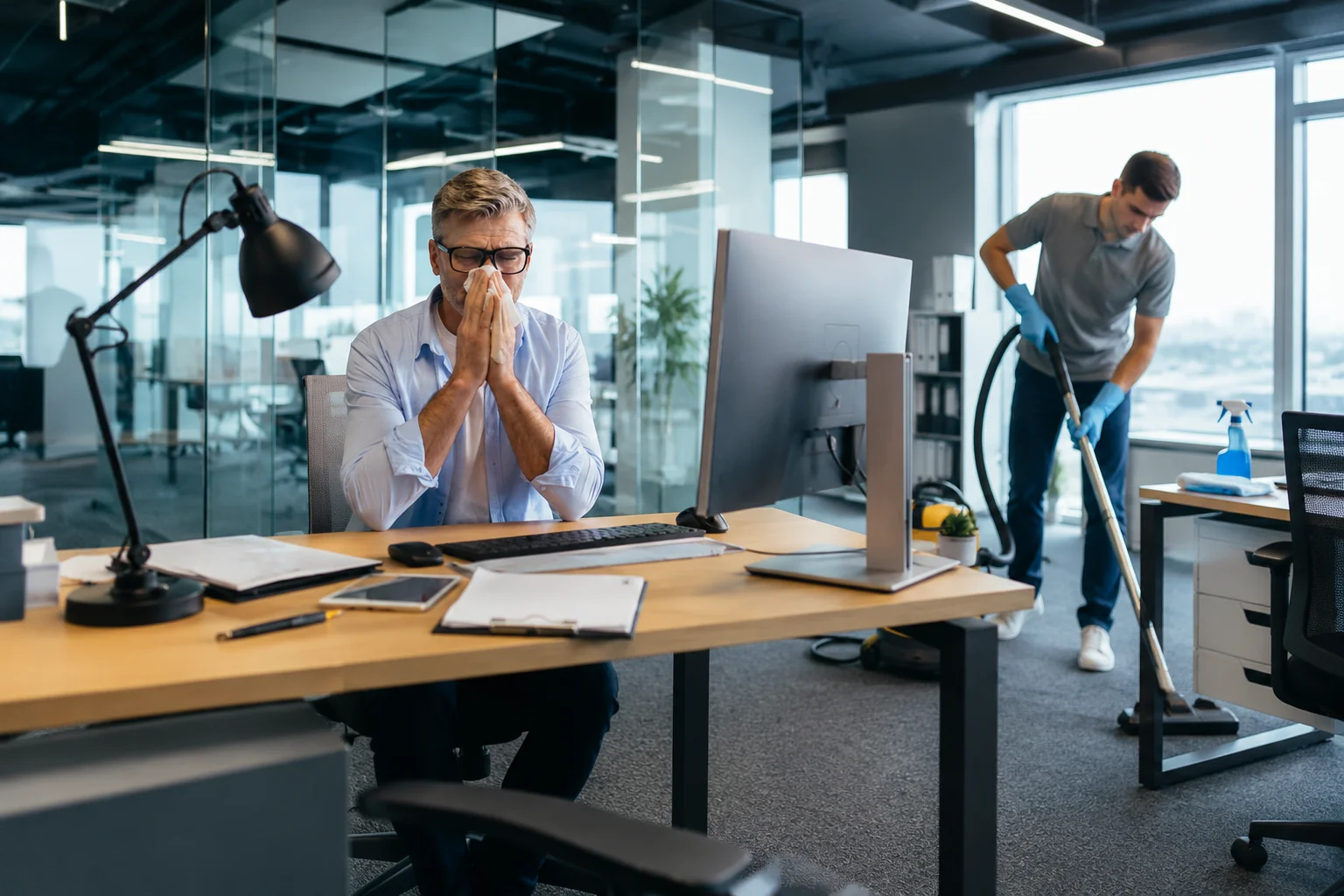
It usually starts quietly. One employee comes in with a slight cough, sits at their desk, answers a few emails, and tries to get through the day. By midweek, another person is sniffling. Soon, half the office feels “off,” even if no one is officially sick.
Flu season has a way of moving through workplaces faster than most managers expect. Shared desks, door handles, meeting rooms, and even the office air itself can carry more than people realize. What looks like a normal workspace can quietly become a place where germs spread from one surface to another.
Professional office cleaning services really make a difference when it comes to reducing the number of sick days people take. They also help improve the health of the workplace.
Why Office Environments Spread Illness So Easily
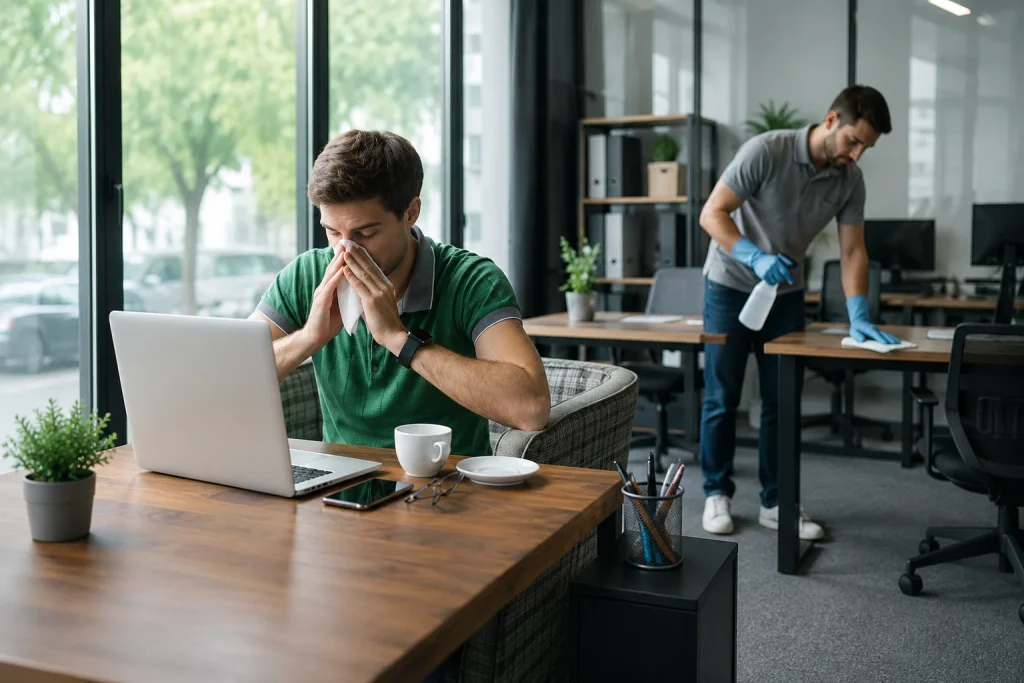
Consistent office cleaning plays an important role in maintaining a healthier and safer work environment. People use the keyboards, phones and elevators. They also share the kitchen and meeting rooms. Even if an office looks really clean it can still have lots of bacteria and viruses. These things can stay on surfaces for a time like hours or even days.
High-Touch Surfaces Drive Most Transmission
In most office environments, illness spreads through shared contact points. Even with basic office cleaning, germs remain active on frequently touched surfaces.
High-risk areas include:
- Door handles and push plates
- Elevator buttons
- Shared printers and scanners
- Desk surfaces and conference tables
- Kitchen counters and coffee machines
The Real Cost of Sick Days in Offices
When employees start calling in sick, the impact goes beyond absence. Work slows down. Deadlines shift. Teams redistribute tasks. Some employees continue working while unwell, which reduces productivity and extends recovery time. Scheduling regular commercial sanitization before flu season peaks can significantly reduce the number of employees falling ill in the first place.
When the flu hits an office it can really mess things up. It can disrupt the timelines of projects and can also increase the workload. The team’s morale can go down because of it.
How Professional Office Cleaning Makes a Difference
Routine cleaning keeps an office looking tidy, but professional office cleaning services focus on reducing microbial contamination and improving workplace hygiene at a deeper level.
Targeted Disinfection of Work Zones
Professional cleaning teams pay attention to areas where germs spread fast. They do not just wipe down surfaces. They use a step- by-step disinfection plan that can make the overall office cleaner.
High-Touch Surfaces Drive Most Transmission
Shared surfaces are the reason the flu spreads in offices. If people do not clean these surfaces regularly germs can spread quickly.
Dense Work Environments Increase Risk
Workplaces with many employees need stronger cleaning systems. This is because there are things that people touch and use every day. So when many people are in one place like at the office they will come into contact with these things.
Surface Clean vs Hygienic Clean
There is a difference between cleaning that you can see and real cleanliness. The surface might look clean. Still have viruses or bacteria on it. Office cleaning usually just makes things look good. Professional cleaning on the hand makes sure to get rid of germs and viruses using the right cleaning methods..
Technical Breakdown: How Germ Reduction Actually Works
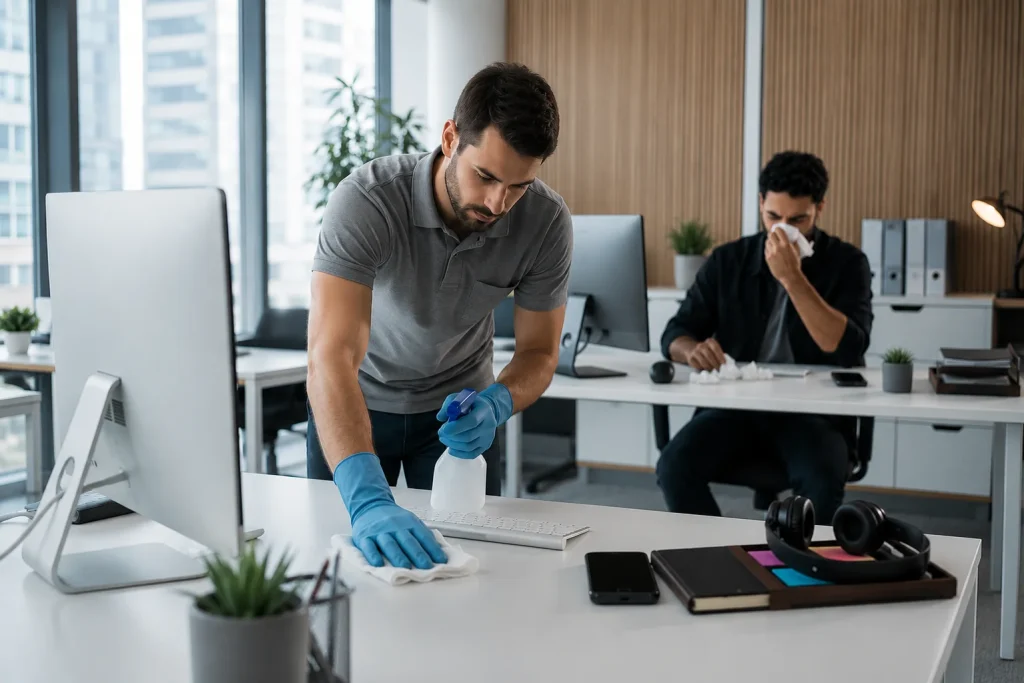
To understand why professional cleaning matters, it helps to break down how infection spreads.
Step 1: Contamination
When someone who is sick touches something or coughs near you they can spread the infection. The tiny drops that come out of their mouth or the virus particles themselves can land on things around them that people touch a lot.
Step 2: Survival
The virus can stay alive on things like tables and doors. It depends on material, humidity and temperature. If the surface is smooth like plastic or stainless steel the virus can stay alive for a longer time. If the surface is rough like cloth or wood the virus will not survive for long.
Step 3: Transfer
When another employee touches the surface they can pick up the virus and then transfer it to their face. People touch their phones, keyboards or rub their eyes all the time. These common things can increase the chances of the virus spreading from our hands to our face.
Step 4: Infection
The virus gets into the body through the eyes, nose or the mouth. When the virus is, inside the body it attaches to the cells. The virus starts to make more of itself. This is when the virus starts the stages of the infection.
DIY Cleaning vs Professional Office Cleaning Services
| Factor | DIY Cleaning | Professional Cleaning |
| Consistency | Often irregular | Structured schedule |
| Disinfection quality | Basic products | Industrial-grade methods |
| Cross-contamination control | Low | High |
| Equipment | Limited | Specialized tools |
| Knowledge of surfaces | Basic | Trained handling |
DIY cleaning can maintain appearance, but professional office cleaning is more effective for infection control, especially during flu season.
Common Mistakes Offices Make
Even well-managed offices make hygiene mistakes that increase flu spread.
Focusing Only on Visible Cleanliness
A clean office can still have lots of germs on surfaces. These germs are tiny. You can’t see them. So just because an office looks clean it doesn’t mean it is clean.
Ignoring Shared Equipment
Printers, scanners and phones are usually not cleaned during cleaning. These devices are touched by employees all day. So they can easily spread germs. Employees use them a lot, which makes them dirty.
Using the Same Cleaning Tools Everywhere
This causes germs to spread between the kitchen and desk areas. Without a separation of cloths and mop heads germs can easily move from one area to another.
Irregular Cleaning Schedules
Inconsistent cleaning lets germs come back between cleanings. This gap gives viruses and bacteria time to spread and come back on surfaces people touch often.
Poor Ventilation Maintenance
Dusty heating and cooling systems spread air. When filters are not cleaned or replaced often particles in the air keep circulating through the office.
Cost Perspective: Cleaning vs Sick Leave
| Factor | Regular Professional Office Cleaning | Cost of Flu-Related Sick Leave |
| Direct Cost | Predictable monthly cleaning expense | Unplanned costs from paid sick leave and replacements |
| Productivity Impact | Maintains consistent workplace hygiene and output | Reduced productivity due to absent employees |
| Project Timelines | Work progresses without interruption | Deadlines may be delayed due to staff shortages |
| Team Workload Balance | Stable workload distribution | Remaining staff take on extra duties, increasing pressure |
| Operational Efficiency | Smooth daily operations with fewer disruptions | Workflow disruptions and slower decision-making |
| Long-term Impact | Supports healthier work environment | Repeated outbreaks can create recurring losses |
Conclusion
Flu season challenges every workplace, but its impact can be controlled. Clean surfaces, structured hygiene practices, and consistent professional office cleaning services, including solutions like Brye A+ Cleaning, work together to reduce sick days and improve workplace performance.
When office cleaning shifts from appearance-based to hygiene-focused, the entire work environment becomes healthier and more stable during peak flu months.
FAQs
1. How does professional office cleaning reduce flu spread?
It reduces germs on high-touch surfaces and improves overall office hygiene, limiting transmission between employees.
2. Which office areas are most responsible for spreading illness?
Shared desks, door handles, kitchen areas, meeting rooms, and office equipment are the highest-risk zones.
3. How often should office cleaning be done during flu season?
Daily cleaning is recommended, with increased disinfection of high-touch surfaces during peak flu months.
4. Can basic office cleaning stop employee sickness completely?
No. It reduces risk but cannot eliminate illness entirely, especially airborne viruses.
5. Why is air quality important in office hygiene?
Poor ventilation can spread airborne germs and reduce the effectiveness of surface cleaning efforts.
6. Are small offices also at risk of flu spread?
Yes. Even small teams share surfaces frequently, making hygiene practices equally important.
7. What is the most common mistake offices make?
Relying only on visible cleaning instead of structured hygiene-focused office cleaning services.