


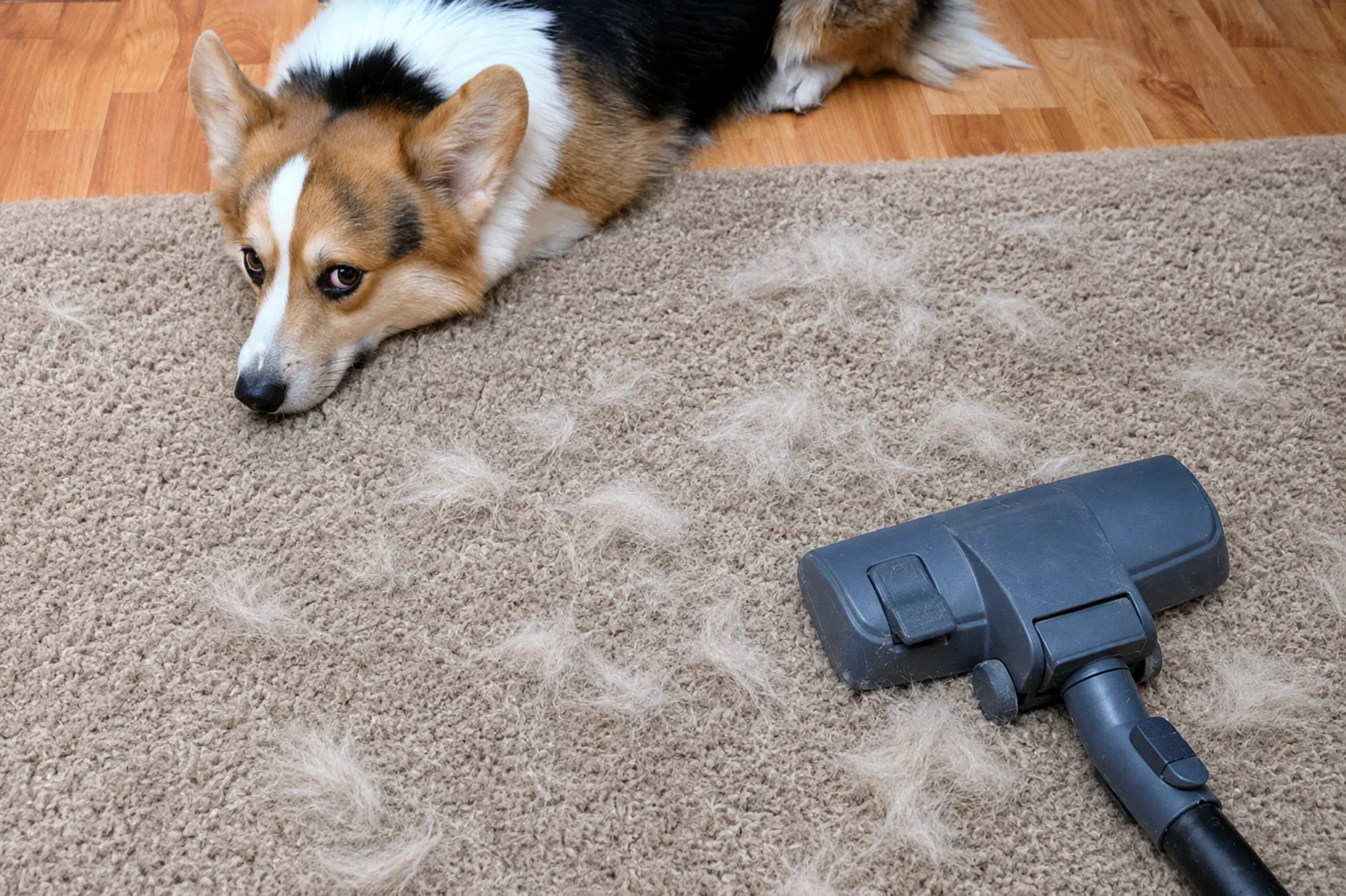
If you have pets, you already know moving means dealing with fur in places you didn’t even know exist, and odors that seem to outlast everything.
I’ve been there. Two dogs, one chaotic move, and a carpet that told the whole story.
The good news? With the right approach, pet odors and fur can be fully eliminated. In this guide you will find out what really works and what does not work. You will also learn how to make your space really clean from the top, to the bottom.
Post-move cleaning for pet owners isn’t just about appearance. It’s about removing what the eye misses but the nose never ignores.
Why Pet-Related Odors and Fur Stay Behind After Moving In
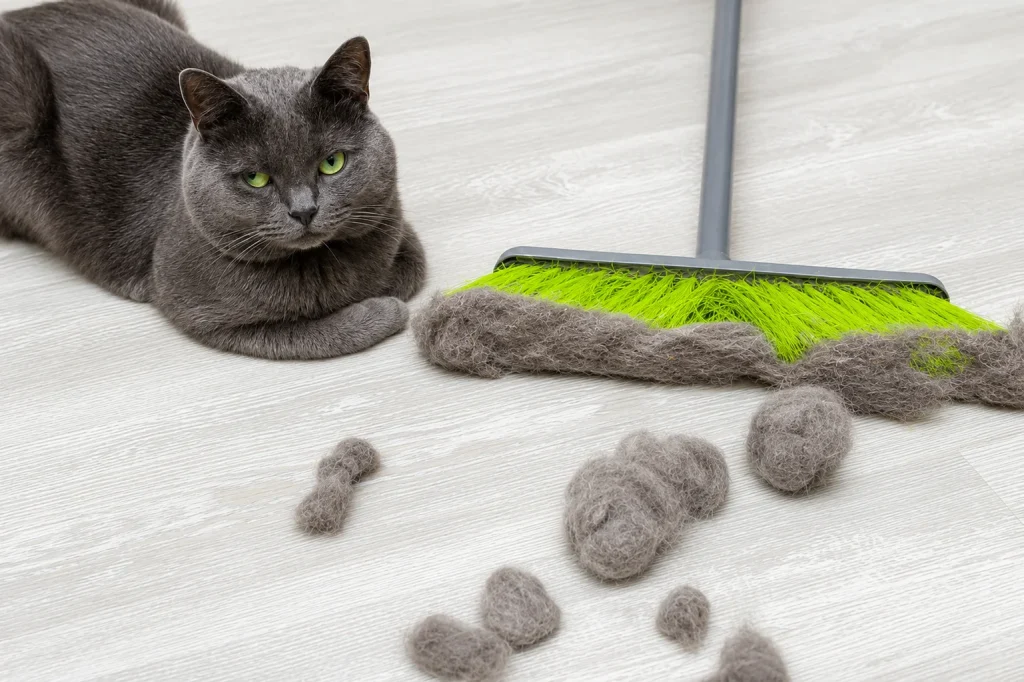
Even in a freshly cleaned apartment, pet traces don’t disappear easily.
Pet hair is made to stick by nature. It gets stuck in fabric fibers, baseboards, air vents, and behind appliances. Odors are different; they come from proteins, saliva, urine, skin oils.
When a new tenant moves in, heating and cooling systems often stir up dirt. That’s why some people notice pet smells, in apartments that were cleaned by professionals. The old dirt and smells get blown out again.
It’s not that the cleaning didn’t happen. It means that pet contamination behaves differently from regular dust.
The Science Behind Pet Odor and Fur Retention
To understand removal, it helps to understand why the problem persists.
Pet odors come from organic compounds. These compounds bind to porous materials like:
- Upholstery
- Carpets
- Curtains
- Wooden flooring seams
- HVAC filters
Once absorbed, they slowly release over time, especially in warm or humid environments.
Fur behaves differently. It moves with airflow. Every time a door opens or the HVAC system runs, loose hair redistributes across surfaces.
Humidity also plays a role. Higher humidity can intensify odor molecules, making them more noticeable even if the source hasn’t changed.
Primary Challenges in Post-Move Pet Cleaning.
Pet cleaning after a move is tricky because fur hides in corners, fabrics, and vents, while odors sink into soft materials. Even after cleaning, HVAC airflow can spread remaining dander and bring smells back
1. Hidden Fur Accumulation
Pet hair collects in unexpected places:
- Inside cabinet hinges
- Under refrigerator coils
- Behind wall trims
- Inside air vents
- Along sliding door tracks
These areas are rarely cleaned during basic turnover services.
2. Lingering Odor in Soft Materials
Soft surfaces absorb odor quickly:
- Sofas
- Mattresses
- Rugs
- Upholstered chairs
Even if they look clean, odor molecules can remain embedded.
3. HVAC Re-Circulation
One of the most overlooked issues is airflow.
The HVAC system can spread these particles around the house. This is because the HVAC system is moving the air around when it is turned on.
The United States Department of Energy says that Heating Ventilation and Air Conditioning systems or HVAC systems use a lot of energy in homes. They move a lot of air around and they also move everything that’s inside the air.
Step-by-Step Post-Move Cleaning Framework for Pet Owners
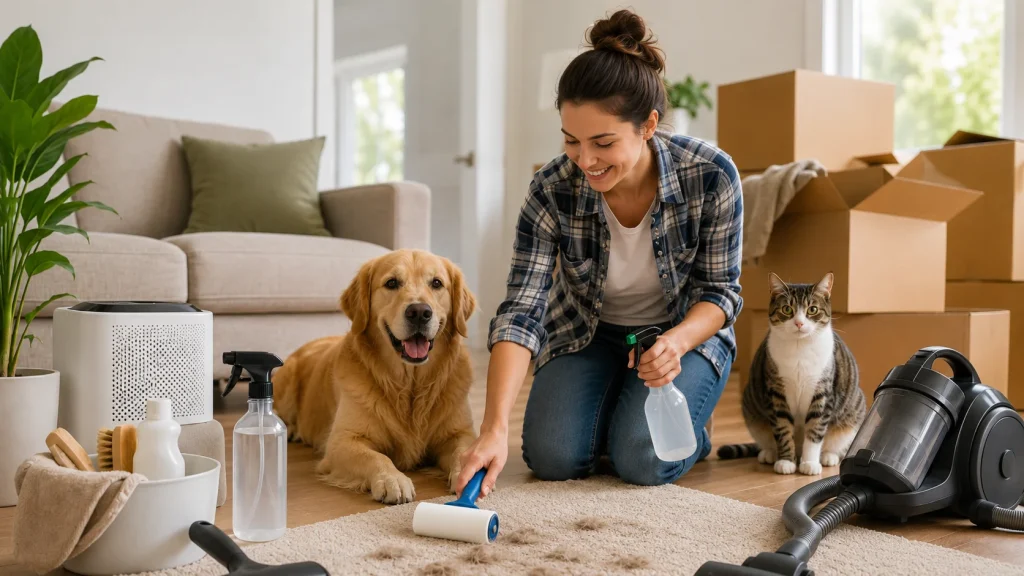
A structured approach helps avoid missing critical areas.
Step 1: Full Air Exchange Before Cleaning
Open windows for at least 30–60 minutes before starting. This reduces airborne particles and makes odor removal more effective.
Even a short air exchange changes how cleaning products perform on surfaces.
Step 2: Dry Removal First (Never Start Wet)
Begin with dry cleaning methods:
- HEPA vacuuming all floors
- Vacuuming upholstery slowly (multiple passes)
- Using microfiber dusters on walls and baseboards
Dry removal prevents fur from turning into sticky residue when moisture is introduced later.
Step 3: Deep Fabric Treatment
Soft surfaces require targeted cleaning:
- Enzyme-based cleaners for odor neutralization
- Steam cleaning for deep fibers (when safe)
- Baking soda treatment for carpets before vacuuming
Enzymatic cleaners are particularly effective because they break down organic compounds rather than masking them.
Step 4: Hard Surface Decontamination
Hard surfaces still hold oils and fine residues:
- Floors (especially corners and edges)
- Kitchen cabinets
- Bathroom tiles
- Window sills
A neutral pH cleaner is typically safer for most surfaces while still effective for residue removal.
Step 5: HVAC and Vent Cleaning
This step is often skipped in DIY cleaning.
Focus on:
- Air vents
- Return grills
- Filters
- Ceiling fans
Dirty filters can reintroduce allergens into clean spaces within hours.
The EPA emphasizes proper HVAC maintenance as a key factor in maintaining indoor air quality.
Step 6: Odor Neutralization (Not Masking)
There is a difference between covering the smell and removing it.
Effective approaches include:
- Activated charcoal placement
- Ozone treatment (professional use only)
- Enzyme-based sprays
- Deep carpet extraction
Avoid heavy artificial fragrances—they only mask the issue temporarily.
DIY vs Professional Pet Odor Removal
| Factor | DIY Cleaning | Professional Cleaning |
| Odor removal depth | Moderate | High |
| Hidden fur removal | Limited | Comprehensive |
| HVAC cleaning | Rarely included | Often included |
| Time required | High | Low |
| Long-term results | Inconsistent | More stable |
DIY methods can handle surface cleaning, but deeper odor problems usually require specialized equipment.
Professional cleaning teams use industrial HEPA vacuums, steam extractors, and enzyme treatments designed for embedded contamination.
Common Mistakes Pet Owners Make After Moving In
Many pet owners focus only on visible cleaning and overlook hidden fur in vents, corners, and upholstery. Another common mistake is using fragrance sprays instead of removing the source of odor.
Relying on fragrance sprays
Air fresheners only mix with odor molecules. The smell returns once the scent fades.
Cleaning furniture before floors
Loose fur from floors will resettle onto cleaned furniture.
Ignoring HVAC systems
This is one of the fastest ways to reintroduce allergens into a freshly cleaned home.
Using too much water on carpets
Over-wetting can trap odor deeper into fibers instead of removing it.
Cleaning only visible areas
Pet hair rarely stays where it is obvious.
Practical Checklist for Post-Move Pet Cleaning
Living Areas
- Vacuum all floors with HEPA filter
- Clean baseboards and corners
- Wipe all surfaces with microfiber cloth
Furniture
- Deep vacuum upholstery
- Apply enzyme treatment where needed
- Clean underneath cushions
Kitchen & Bathrooms
- Clean cabinet interiors
- Wipe all handles and surfaces
- Disinfect hard surfaces
HVAC System
- Replace air filters
- Clean vents and registers
- Inspect airflow consistency
Odor Control
- Use enzyme-based neutralizers
- Place activated charcoal in corners
- Maintain ventilation for 24–48 hours
Why Pet Odors Feel Worse in New Homes
Interestingly, odors often feel stronger after moving into a new place.
This happens due to:
- Empty rooms amplifying sound and smell
- Fresh paint interacting with airborne compounds
- Limited furniture absorption balance
- Closed windows during settling periods
Once furniture fills the space, odor perception often changes again—but only if the underlying source is addressed.
Expert-Level Insights From Field Experience
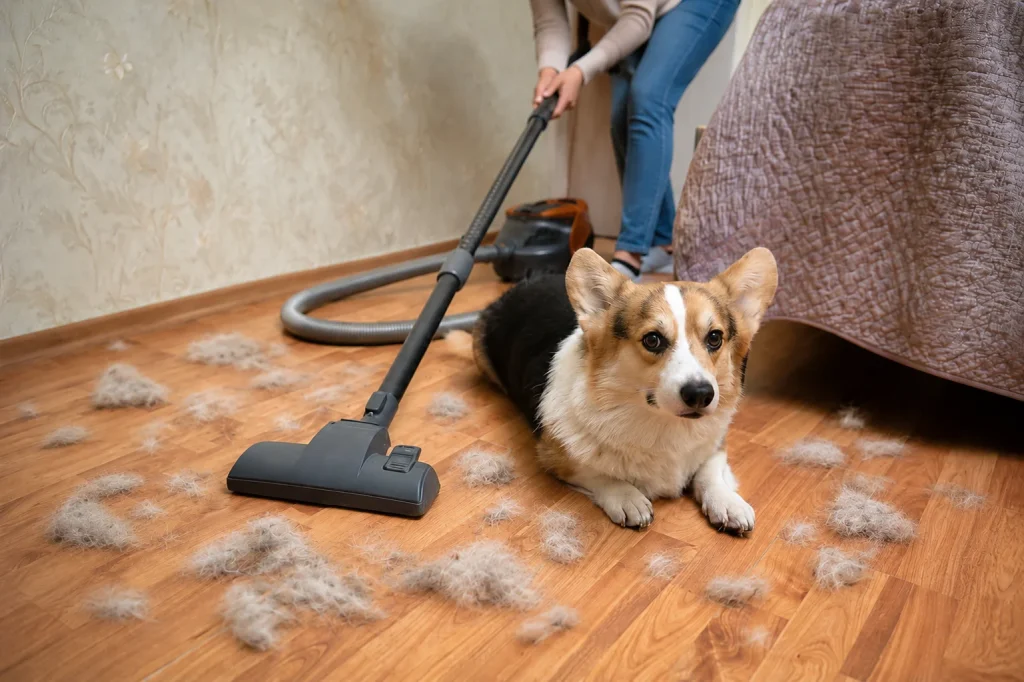
In real cleaning environments, pet-related move-in jobs tend to follow a pattern.
The biggest issue is not visible dirt. it’s layered contamination.
For example a carpet may look really clean after you vacuum it. It can still smell bad when it gets hot or humid. A couch is the same, it may look fine when you look at it. It can still have pet dander stuck deep down in the seams of the couch.
The smell usually comes back within days like 24 to 72 hours if the heating and air conditioning systems are not cleaned or if the filters are not replaced.
Cleaning professionals usually treat pet odor removal as a system-wide process rather than isolated spot cleaning.
When to Call Professional Help
DIY cleaning works well for light fur and mild odor.
Professional help becomes more practical when:
- Odor persists after repeated cleaning
- Multiple pets lived in the space previously
- Carpets are heavily saturated
- HVAC systems show contamination
- Allergy symptoms increase indoors
Final Thoughts
Post-move cleaning for pet owners is less about effort and more about precision. Fur hides in airflow paths, odors settle into fibers, and HVAC systems quietly redistribute what’s left behind.
A structured approach starting with dry removal, followed by targeted deep cleaning and airflow attention makes a noticeable difference in how a home feels within the first few days.
Many homeowners also rely on professional services like Brye A+ Cleaning to handle deeper odor and fur removal that standard cleaning can miss.
The goal isn’t perfection. It’s a space where you don’t notice what used to be there anymore.
FAQs
Q1: What is post-move cleaning for pet owners?
Post-move cleaning for pet owners is a deep cleaning process that targets pet-specific problems like embedded fur, lingering odors, and airborne dander either when leaving an old home or moving into a new one. It goes beyond standard cleaning because pet contamination behaves differently from regular dust and dirt.
Q2: Why does my new home still smell like pets even after cleaning?
Pet odors come from organic compounds that bind deep into porous materials like carpets, upholstery, and wood. Even after surface cleaning, these compounds slowly release over time especially when the heating system turns on and circulates air through dirty vents and filters.
Q3: What is the best way to remove pet odor after moving in?
Enzyme-based cleaners are the most effective solution. They break down the organic compounds that cause odor rather than masking them. Combined with HEPA vacuuming, steam cleaning, and HVAC filter replacement, they deliver the most complete results.
Q4: How do I get rid of pet fur after moving into a new home?
Start with dry removal first HEPA vacuuming floors and upholstery, and microfiber dusting walls and baseboards. Never start with wet cleaning, as moisture can turn loose fur into sticky residue. Pay special attention to air vents, cabinet hinges, and sliding door tracks where fur collects unnoticed.
Q5: Does post-move cleaning need to include HVAC cleaning?
Yes. The HVAC system is one of the most overlooked parts of post-move cleaning. It continuously circulates air and everything in it, including pet dander, fur, and odor particles. Replacing filters and cleaning vents is essential to prevent smells from coming back within 24 to 72 hours.
Q6: Can I do post-move pet cleaning myself or do I need a professional?
DIY post-move cleaning works well for light fur and mild odors. However, if the smell persists after repeated cleaning, multiple pets live in the space, or carpets are heavily saturated, professional cleaning is the more reliable option. Professionals use industrial-grade equipment that reaches contamination DIY tools simply cannot.