


Walk into any office after a few busy weeks, and the carpets tell the whole story.
Foot traffic grinds in dust. Coffee spills are easy to clean and usually get wiped away quickly. But allergens come in through vents and slowly build up in carpet fibers. You don’t notice them until they become a problem.
The dirt that gets stuck in carpets does not just make them look old. It actually changes the atmosphere of the office. People who work there start sneezing a lot more. A smell stays in the air no matter how many windows you open. The air in the office feels heavy..
The fix isn’t complicated, but it does require the right approach.
This guide is about office carpet cleaning techniques that really work. It will show you how to get rid of things that make you sneeze office carpet odors that’re hard to remove and make your office carpet feel fresh again.
Office Carpet Cleaning for Allergens and Odors
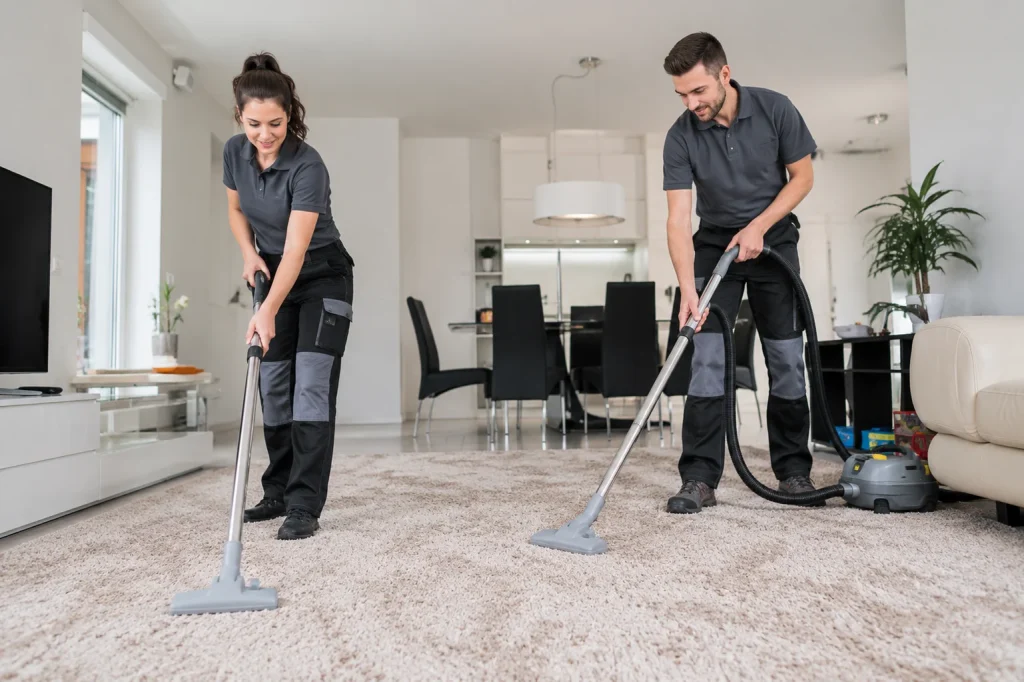
Office carpet cleaning for allergens and odors is the process of deeply cleaning commercial carpets to remove dust, bacteria, allergens, and trapped smells that build up over time. It goes beyond regular vacuuming and focuses on restoring both cleanliness and air quality in the workspace.
It is mainly used by office owners, facility managers, and cleaning staff who want to maintain a healthier and more professional working environment. Businesses with high foot traffic or shared workspaces benefit the most.
An office carpet can trap up to four times its own weight in dirt, dust, and allergens yet it is one of the most overlooked surfaces in any workplace cleaning routine.
Why Office Carpets Are Allergen Hotspots
Think about everything that walks into your office every day.
- Shoes with pollen from outside.
- Hair on peoples clothes.
- Food crumbs from eating at your desk.
- Skin cells that people naturally shed.
All of it ends up on the carpet and gets deep into its fibers.
The carpet is like a sponge. It keeps particles from moving in the air. When this happens the carpet starts to release allergens and bad smells into the air. The carpet gets completely full. Then it lets all the allergens and odors out, at once.
The Most Common Allergens Hiding in Office Carpets
Office carpets can hide dust, pollen, mold, and other allergens that impact workplace air quality and health.
Dust Mites
Microscopic creatures that feed on dead skin cells and thrive in carpet fibers, especially in humid offices.
Mold Spores
Any spill left untreated can become a mold breeding ground within 24–48 hours in warm conditions.
Pollen
Tracked in on shoes and clothing year-round, pollen embeds deep into carpet piles and triggers seasonal allergies.
Pet Dander
Even pet-free offices receive dander from employees’ clothing, which settles and accumulates over time.
Volatile Organic Compounds (VOCs)
Off-gassing from furniture and cleaning products absorbed and re-released by carpet fibers.
Bacteria & Germs
Shoes carry thousands of bacteria strains from public spaces directly into your office carpet daily.
The Right Cleaning Frequency: A Simple Framework
Not every office carpet needs the same attention. The cleaning frequency you need depends on your foot traffic, the nature of work done in the space, and whether food or beverages are consumed near carpeted areas.
| Office Type | Vacuuming | Deep Clean | Spot Treatment |
| High-traffic (retail, clinics) | Daily | Every 3 months | As needed, immediately |
| Medium-traffic (corporate offices) spill | 3–4× weekly | Every 6 months | Within 24 hours of |
| Low-traffic (small studios) | 2× weekly | Annually | As needed |
Signs Your Carpet Needs Attention Right Now
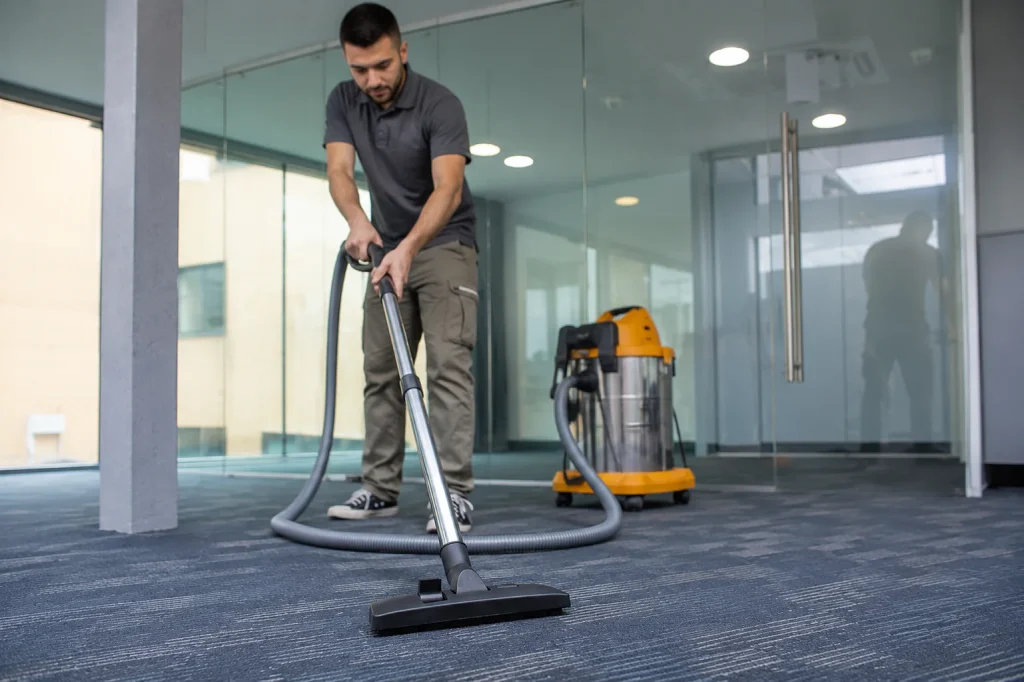
Don’t wait for a scheduled clean if you notice any of the following:
Don’t wait for a scheduled cleaning if you notice:
- Persistent musty or stale odors
- Visible discoloration in high-traffic areas
- Employees experiencing frequent sneezing or itchy eyes
- Carpet fibers that remain matted after vacuuming
These signs may indicate that allergens and bacteria have built up beyond the surface layer.
Step-by-Step Office Carpet Cleaning Techniques
Clean office carpet in steps. If you skip some of these steps the office carpet will still have allergens. You will just be moving them around on the office carpet instead of getting rid of them.
HEPA Vacuuming — The Non-Negotiable First Step
Always start with a HEPA-filter vacuum. Regular vacuums can spread particles back into the air. That is not good. A HEPA-filter vacuum keeps particles down. Go over each area two times. Do it one time with the grain of the carpet and one time against the grain of the carpet. Also use a tool called a crevice tool along the baseboards. This is because allergens like to collect.
Dry Baking Soda Treatment for Odor Absorption
After vacuuming, sprinkle baking soda over the carpet. Use a brush with bristles to gently work it into the carpet fibers. Leave it on for least 30 minutes. For bad smells you can leave it on for up to 8 hours. Baking soda works by neutralizing smell compounds at the molecular level. It doesn’t just cover up the smell. Then vacuum the carpet again to remove all the baking soda.
Hot Water Extraction (Steam Cleaning)
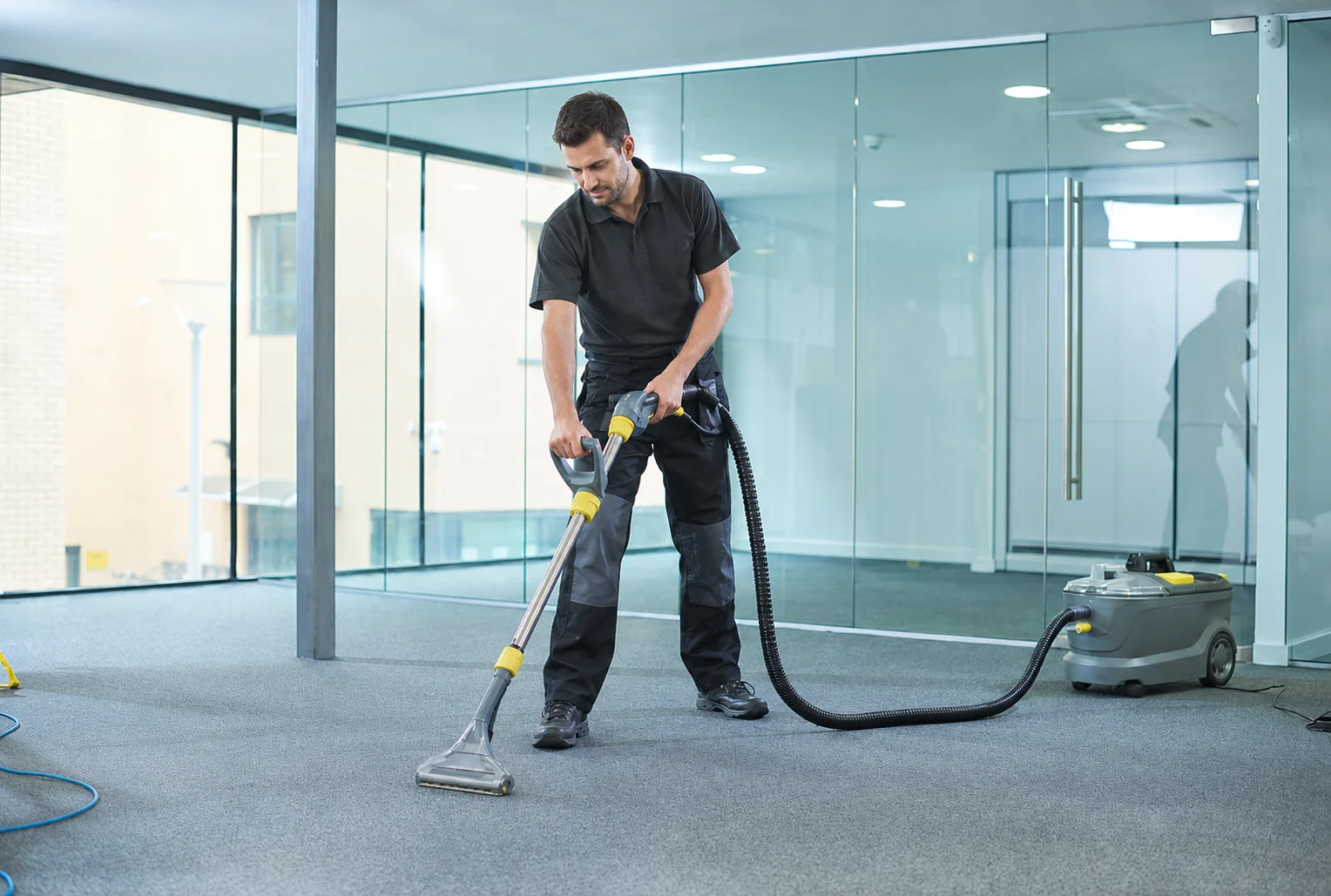
Hot water extraction is a way to deep clean your carpet. It works by using a machine to push water and cleaning solution into the carpet. The machine then sucks it back up away along with dirt, dust mites and bacteria. Let it dry for 4 to 8 hours. Good airflow will help it dry faster.
Dry Compound Cleaning for Low-Moisture Needs
If your office can’t afford to wait for carpet drying times, dry compound cleaning is a great option. Use a machine to spread a moist cleaning compound on the carpet and work it into the fibers. This compound absorbs all the dirt. The best part is that your carpets are ready to use in 20 to 30 minutes.
Enzyme Cleaners for Organic Stains and Odors
Spilling food or drinks on the carpet can really smell bad. When this happens the best thing to do is use a cleaner that has enzymes in it to get rid of the smell. The enzymes in the cleaner break down the food or drinks that are causing the smell at a small level. To use the cleaner, spray a lot of it on the spill. Wait for 10 to 20 minutes to let the enzymes do their job.
Encapsulation Cleaning for Maintenance Cycles
Encapsulation is ideal for maintaining carpets between deep cleans. A polymer solution is applied, as it dries it forms a coating around the dirt. This hard coating loosens its grip on the carpet fibers. When you vacuum the dirt comes out easily. This way your carpet will last longer. You will not need to clean with hot water as often.
Targeting Specific Odors: What Actually Works
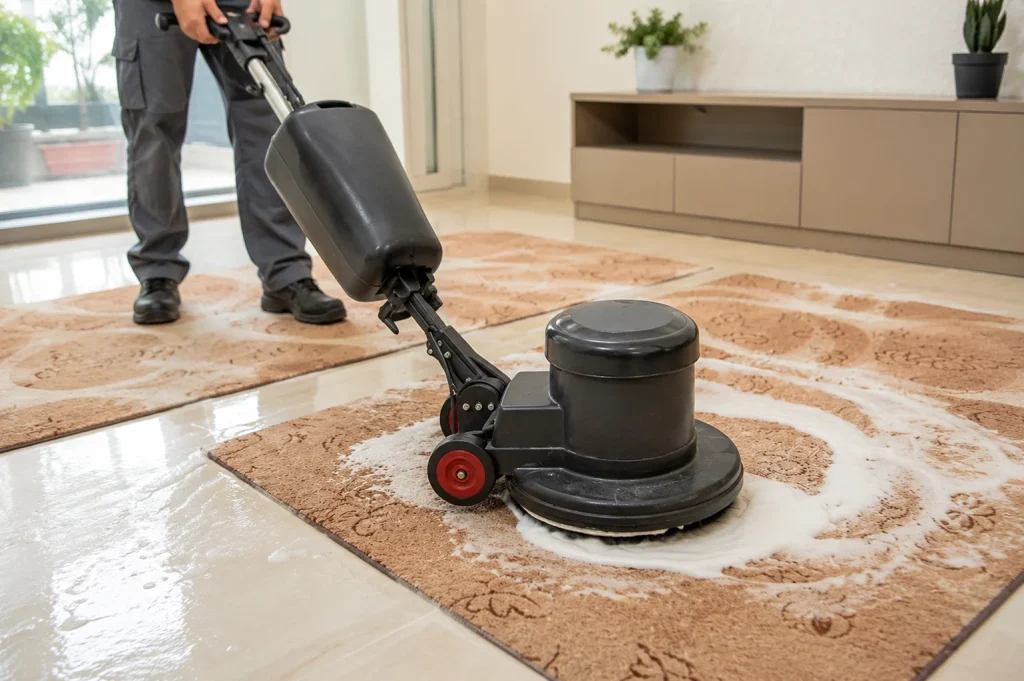
Different odors require different approaches. Using the wrong treatment can temporarily suppress a smell while allowing its source to continue growing beneath the surface.
Musty or Mildew Odors
A musty smell almost always means moisture. Find and fix the source first, then apply a diluted white vinegar solution (1 part vinegar to 2 parts water), let it sit for 10 minutes, and blot dry. Vinegar is naturally antifungal and safe on most carpet fibers — follow up with a baking soda treatment to finish the job.
Food and Beverage Odors
Food and beverage odors act fast, blot fresh spills immediately, apply an enzyme cleaner, and blot again. Avoid hot water on protein-based spills like dairy or egg, as heat sets the stain permanently.
General Stale Air and Embedded Odors
Regular baking soda treatments combined with better ventilation during cleaning sessions tackle this best. An air purifier with an activated carbon filter near carpeted zones helps capture VOCs before they resettle.
Prevention: The Overlooked Half of the Strategy
Reactive cleaning is necessary, but a smart prevention strategy cuts your cleaning workload dramatically and keeps allergen levels consistently low between sessions.
Smart Prevention Habits That Make a Real Difference
Use walk-off mats at every entrance. Good quality entrance mats are really helpful. They have a surface that catches dirt from our shoes. This stops the dirt from getting on the carpet. If we use these mats we can stop up to 85 percent of dirt from getting.
Implement a no-food-at-desk policy in carpeted zones or designate specific eating areas with easy-to-clean hard flooring to contain food-related odors and stains.
Address spills within the first five minutes. The longer a spill stays the deeper it goes. Keep a cleaning kit handy, in shared areas.
This kit should have:
- A cleaner that uses enzymes
- Cloths
- A spray bottle
Maintain indoor humidity between 40–50%. Dust mites cannot survive below 50% relative humidity. A simple dehumidifier in your HVAC zone can dramatically reduce their populations in carpet.
Schedule regular HVAC filter changes. Dirty air ducts blow stuff back onto our carpets. We should clean our HVAC filters often. It depends on how much we use them. Every 1 to 3 months is a good rule. This helps keep the air clean.
Apply carpet protector after deep cleaning. Fluoropolymer-based protectors, such as Scotchgard, make a barrier on fibers. This barrier helps to push away liquids. It also makes it easy to vacuum up soil.
DIY vs. Professional Cleaning: Making the Right Call
Not every cleaning task requires a professional service, but knowing when to call one in is an important part of managing office hygiene responsibly.
| Situation | DIY Capable? | Professional Recommended? |
| Routine maintenance vacuuming | Yes | No |
| Fresh spill spot treatment | Yes | No |
| Baking soda odor treatment | Yes | No |
| Hot water extraction (large area) | With rental | Preferred |
| Mold or mildew treatment | Limited | Strongly recommended |
| Post-flood or water damage restoration | No | Essential |
The Bottom Line
A clean office carpet is not a luxury or a matter of appearances alone. Brye A+ Cleaning is a trusted name that ensures it directly shapes the air quality your team breathes every hour of the workday, the frequency of allergy-related sick days, and the overall atmosphere of your workspace.
The good news is that you do not need to spend a lot of money or follow a routine to get real results. To keep allergens and odors under control try these steps: Consistent vacuuming with a HEPA filter, clean up spills away, deep clean every six months using hot water extraction or dry compound methods.
Start with the techniques that fit your budget and office size right now and build from there. Your team, and their sinuses, will notice the difference.
FAQ’s
How long does it take for office carpet to dry after steam cleaning?
With a commercial-grade hot water extraction machine and good airflow, most carpets dry within 4–8 hours. You can speed this up significantly by opening windows, running fans, or using dehumidifiers. Avoid walking heavily on wet carpet as it can cause re-soiling and crushing of wet fibers.
Can regular vacuuming alone remove allergens from office carpet?
Regular vacuuming with a HEPA-filter machine removes a significant portion of surface allergens, but it cannot reach allergens embedded deep in carpet piles or eliminate odor-causing bacteria. Deep cleaning methods like hot water extraction are necessary at least twice a year to address what vacuuming leaves behind.
Is baking soda safe for all carpet types?
Baking soda is safe for most synthetic carpet fibers including nylon, polyester, and olefin. However, with natural fiber carpets like wool or sisal, it’s best to test a small area first and not leave it on for extended periods, as the fine powder can work into natural fibers and be difficult to remove completely.
How do I remove a persistent mold smell from office carpet?
Start by ensuring the carpet is fully dry and the moisture source is resolved. Apply a diluted white vinegar solution, allow it to penetrate for 10–15 minutes, and blot thoroughly. Follow with a baking soda treatment. If the smell persists after two treatments, the mold has likely penetrated to the carpet backing and professional remediation — and potentially carpet replacement — will be necessary.