



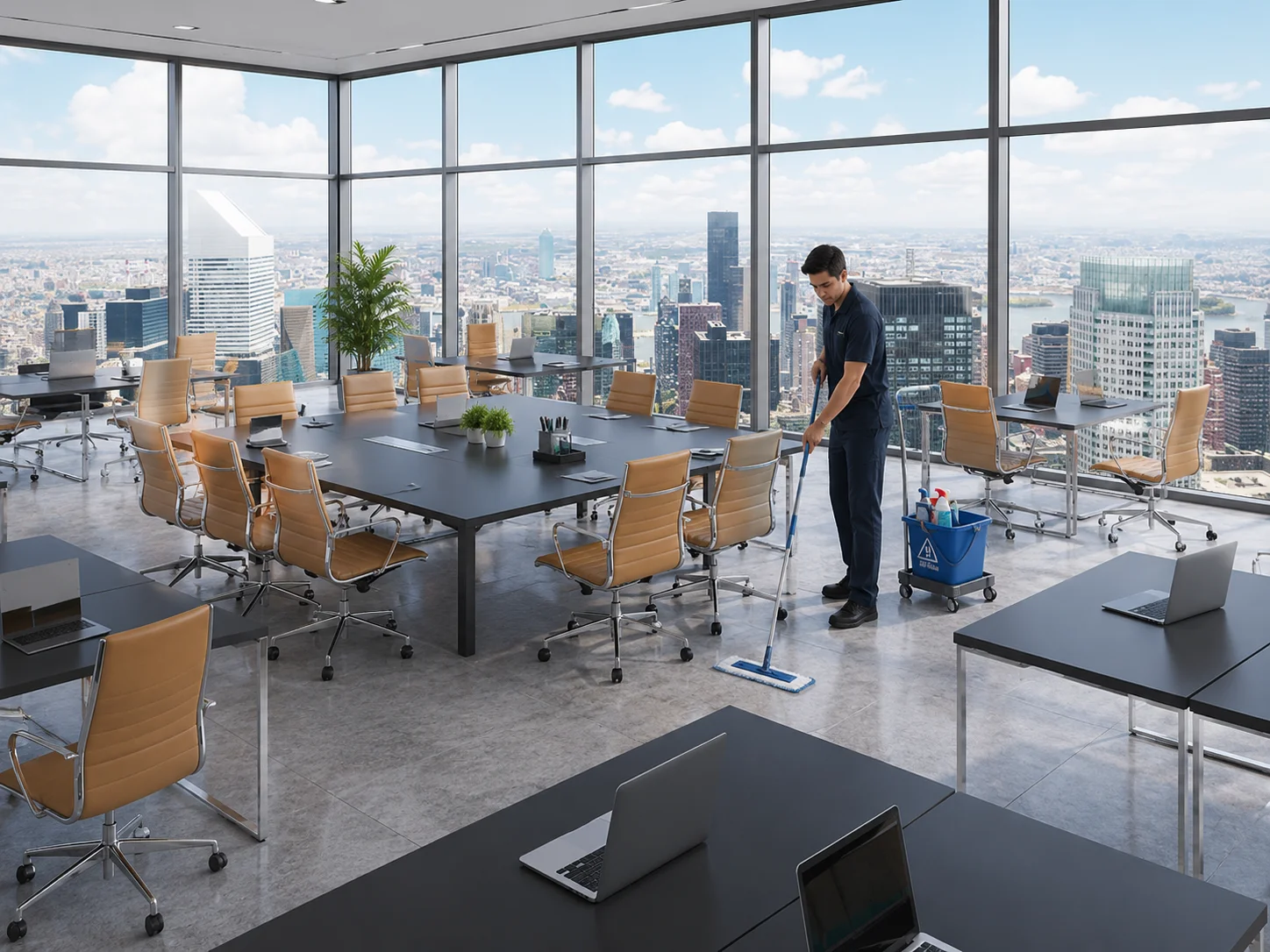
Office cleaning in Manhattan can be a major operating expense due to high labor costs, busy workplaces, and strict building requirements. While many businesses outsource cleaning to save time and money, outsourcing alone does not guarantee lower costs. Companies often overspend by choosing unnecessary services or inefficient cleaning schedules.
The good news is that businesses can cut down on cleaning costs without making their office dirty. They can do this by checking how commercial cleaning services work. Companies should see what they really need for cleaning. This way they can keep their office looking professional and neat.
This guide explores proven cost-saving tips for outsourcing office cleaning in Manhattan, helping business owners, office managers, and facility coordinators make smarter decisions.
Why Office Cleaning Costs Matter in Manhattan
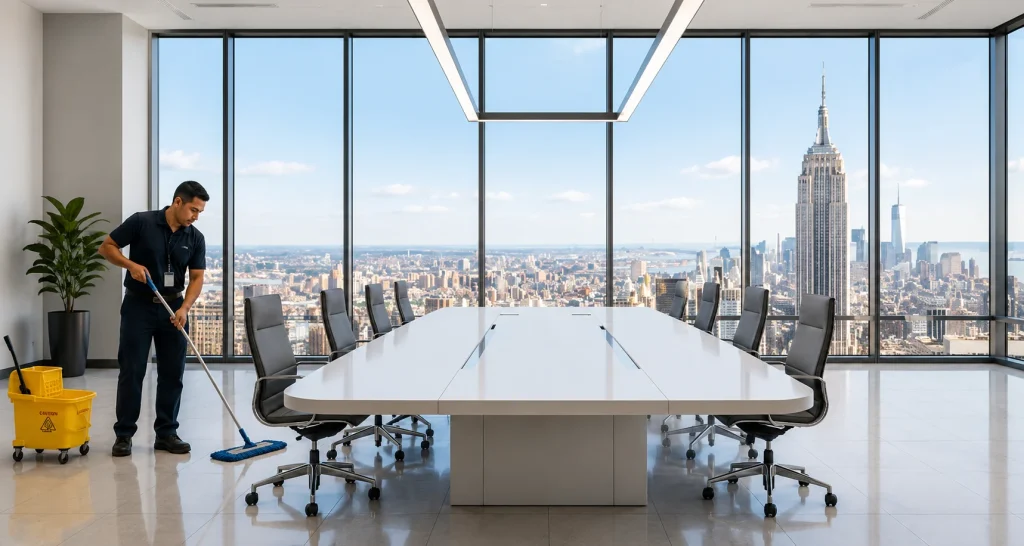
Manhattan presents unique challenges for commercial cleaning.
Office buildings have extended working hours, few elevators for cleaning staff, strict security and many people. All these increase labor costs because they have to pay staff for working during evenings or late at night.
At the same time, a poorly maintained office can cost a lot of money making commercial air duct cleaning essential for maintaining healthy indoor air quality. The carpets get dirty. If the restrooms are not cleaned properly the employees and visitors who use the office will complain about the restrooms.
The goal is not necessarily to spend less on cleaning. The goal is to spend efficiently.
What Drives Commercial Cleaning Costs
Before cutting expenses, it helps to understand where costs originate.
Office Size
Larger spaces require more labor hours, equipment, and supplies. A small office of about 2,000 square-feet might only need one or two cleaners. On the other hand a large workspace of 20,000 square feet usually needs many cleaners and special cleaning machines.
Cleaning Frequency
Daily cleaning naturally costs more than service provided several times per week. Many businesses automatically choose five-day service schedules without evaluating actual traffic patterns.
Building Access Requirements
Some Manhattan buildings require security check-ins, special elevator access, after-hours entry procedures and insurance documentation. These requirements can increase operational costs for cleaning companies.
Specialized Services
Standard office cleaning usually includes vacuuming, dusting, restroom sanitation and trash removal. Additional services, like carpet extraction, floor stripping and window cleaning cost more. They also offer disinfection programs which increase costs
Assess Your Actual Cleaning Needs First
One of the biggest mistakes businesses make is paying for services they do not truly need. Many office managers simply renew existing contracts year after year without reviewing workplace usage.
Consider questions such as:
- How many employees currently use the office?
- Are workers fully in-office or hybrid?
- Which areas receive the most traffic?
- Which areas are rarely used?
For example, many offices in Manhattan changed their work schedules. An office that used to have 100 employees every day only has 40 to 50 employees on most days.
Conduct a Simple Cleaning Audit
Walk through the office and identify:
| Area | Usage Level | Cleaning Priority |
| Reception | High | Daily |
| Restrooms | High | Daily |
| Conference Rooms | Moderate | As needed |
| Private Offices | Low | Weekly |
| Storage Rooms | Very Low | Monthly |
This simple assessment often reveals opportunities to reduce service frequency.
Choose the Right Cleaning Frequency
Reducing cleaning frequency is often the fastest way to lower costs. However, cutting too aggressively can create new problems.
Daily Cleaning Works Best For
- Medical offices
- Law firms with constant client traffic
- Financial institutions
- High-density workplaces
Three Times Per Week Often Works For
- Hybrid offices
- Small businesses
- Professional service firms
- Technology companies
Weekly Service May Be Suitable For
- Low-occupancy spaces
- Satellite offices
- Executive suites with limited usage
Bundle Services Strategically
Many businesses purchase services individually throughout the year. For example, carpet cleaning in spring, floor maintenance in summer, window cleaning in fall. When services are booked separately, providers often charge additional mobilization and scheduling costs. Bundling multiple services into a single annual contract can create measurable savings.
Common bundled services include routine office cleaning, carpet maintenance, hard floor care, interior window cleaning and restroom deep cleaning.
Avoid Paying for Unnecessary Deep Cleaning
Deep cleaning has value, but it should be scheduled strategically. Some offices order comprehensive deep cleaning services far more often than necessary. In practice, the need depends on factors such as employee count, visitor volume, food consumption and seasonal conditions. An office with moderate traffic may only require deep cleaning quarterly rather than monthly. A cleaning provider should be able to explain exactly why a deep cleaning recommendation is necessary.
Compare Fixed Contracts vs Customized Agreements
Not all office cleaning contracts are structured the same way.
Fixed Contracts
Advantages:
- Predictable monthly expenses
- Easier budgeting
- Consistent service schedules
Disadvantages:
- May include unused services
- Less flexibility
Customized Agreements
Advantages:
- Services tailored to actual needs
- Potential cost reductions
- Greater flexibility
Disadvantages:
- More management oversight
- Variable monthly costs
Many Manhattan businesses save money by moving from generic service packages to customized cleaning agreements.
Use Day Porters Only When Necessary
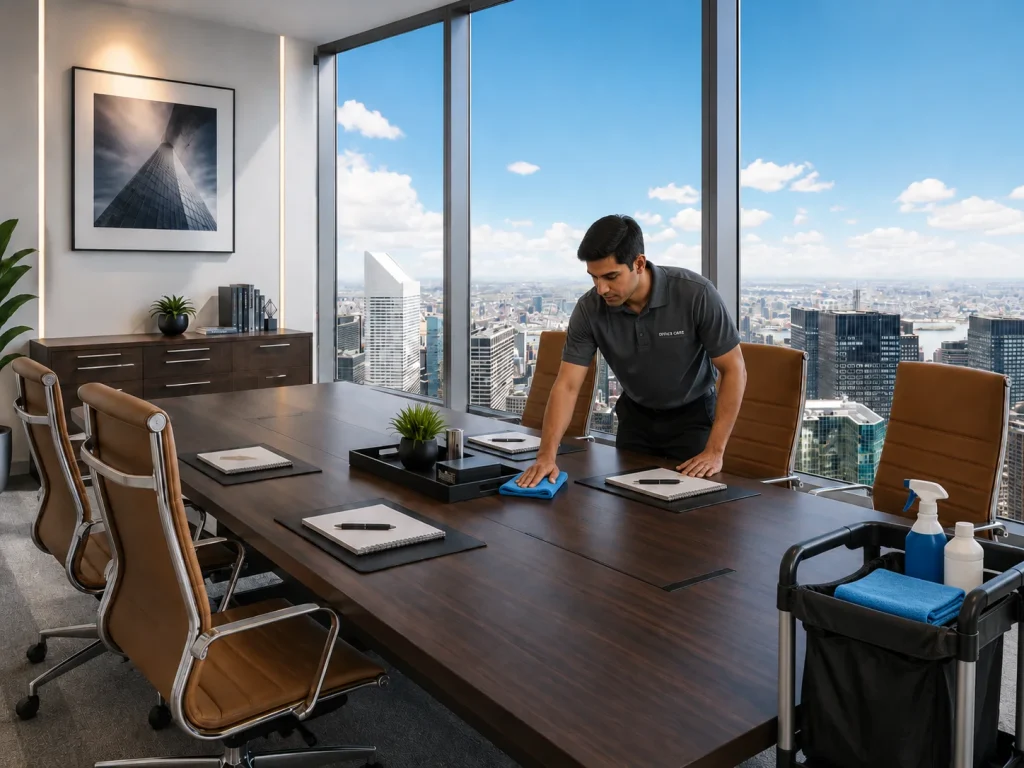
Day porters are really helpful because they provide cleaning support during the time when most businesses are open. Responsibilities may include checking the restrooms, removing the trash, cleaning up spills and taking care of the lobby area.
Day porter services are really helpful in high-traffic environments, because it can be very costly because you need to have people working during operating hours making it worth considering a broader janitorial cleaning service that bundles daytime support more efficiently. Businesses should evaluate whether occasional daytime cleaning needs justify a full-time porter presence.
Invest in Preventive Maintenance
Preventive cleaning often costs less than restorative cleaning. This principle applies across virtually every office environment.
Carpets
Routine vacuuming removes abrasive dirt particles before they damage fibers. Neglected carpets require costly extraction and replacement sooner.
Hard Floors
Regular maintenance prevents buildup that eventually requires stripping and refinishing.
Upholstery
Scheduled cleaning prevents permanent staining and extends furniture lifespan. A small preventive maintenance budget frequently eliminates larger repair and replacement costs later.
Standardize Consumable Supplies
Many outsourced office cleaning services also manage consumables. Examples include paper towels, toilet tissue, hand soap, and trash liners.
Businesses sometimes overspend because multiple departments purchase supplies independently. Centralizing procurement often reduces costs through bulk purchasing, reduced waste and better inventory management.
Request Detailed Scopes of Work
A vague cleaning contract often leads to hidden costs. Every agreement should clearly specify:
Daily Tasks
- Empty trash
- Vacuum floors
- Sanitize restrooms
Weekly Tasks
- Dust surfaces
- Clean glass partitions
Monthly Tasks
- High dusting
- Detailed floor maintenance
Detailed scopes reduce misunderstandings and prevent surprise charges.
Use Performance Reviews Instead of Increasing Frequency
A common reaction to cleanliness complaints is adding more cleaning visits. This approach often increases costs without addressing the real issue. Sometimes the problem is execution rather than frequency. Missed trash bins, incomplete restroom cleaning and poor communication are common examples. Regular quality inspections can identify performance issues before increasing service levels.
DIY vs Professional Office Cleaning
Some businesses consider handling cleaning internally to save money.
The reality is often more complex.
| Factor | DIY Cleaning | Professional Cleaning Services |
| Labor Costs | Employee time diverted | Dedicated cleaning staff |
| Equipment | Purchased separately | Included |
| Training | Limited | Professional standards |
| Consistency | Variable | Structured processes |
| Liability | Internal responsibility | Provider coverage |
| Efficiency | Lower | Higher |
For very small offices, limited in-house cleaning may work. For most Manhattan workplaces, professional office cleaning services remain more efficient and cost-effective.
Common Mistakes Businesses Make
Several patterns repeatedly increase cleaning costs unnecessarily.
Choosing Solely Based on Lowest Price
Low bids sometimes lead to reduced staffing, missed tasks and frequent service issues. The cheapest option can become expensive if quality problems require correction.
Ignoring Contract Reviews
The office needs change.Contracts should be reviewed annually to ensure services still match occupancy and usage levels.
Overlooking Building Requirements
Some providers underestimate access restrictions and operational requirements, resulting in additional charges later.
Failing to Monitor Performance
Without inspections, service quality can gradually decline while costs remain unchanged.
Ordering Excessive Specialty Services
Not every office needs frequent carpet extraction, disinfection treatments, or intensive floor restoration. Services should be driven by actual need rather than routine scheduling.
Expert Tips for Reducing Commercial Cleaning Expenses
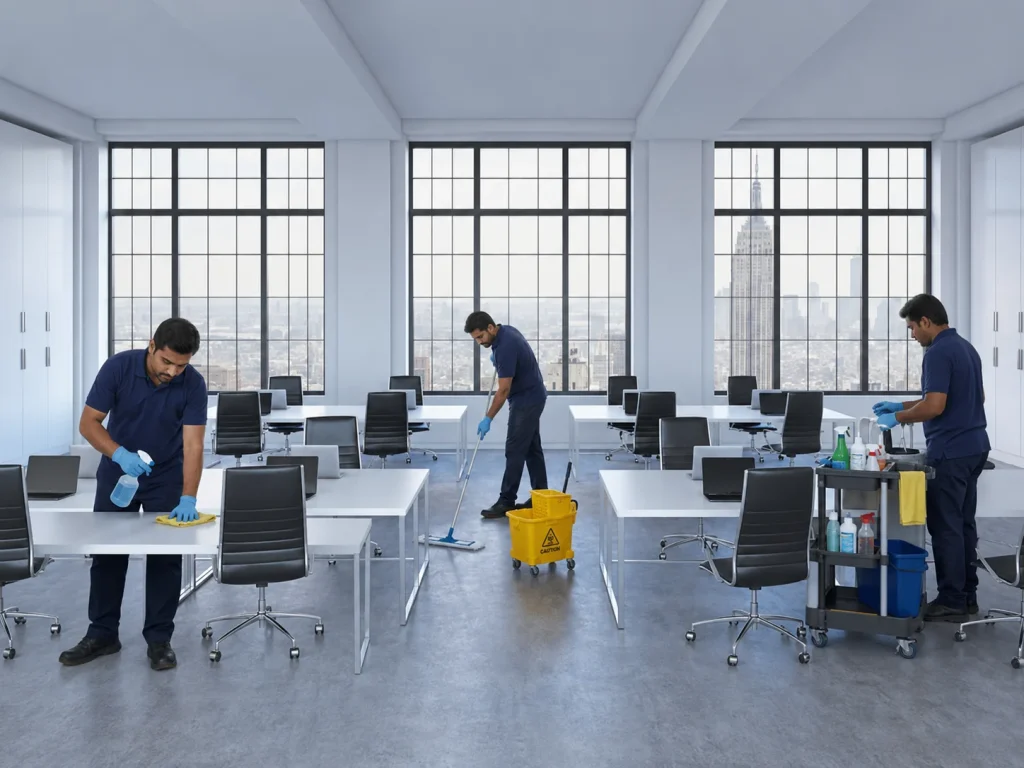
After years of observing commercial cleaning operations, several practices consistently help businesses control costs.
Focus on High-Traffic Areas
Allocate resources where the employees and visitors spend most of the time. The reception areas, breakrooms and restrooms are the places that generate the highest return on cleaning investment.
Use Entrance Matting
A lot of dirt gets tracked into buildings through the doors. Using entrance mats really helps to cut down on cleaning inside and keeps the floors looking good for longer.
Schedule Seasonal Reviews
Winter in Manhattan can be really tough, because of moisture, salt and debris. Seasonal adjustments are preferred because they can help people save money when they do not need to clean as much. For stubborn seasonal buildup on building surfaces, exterior cleaning services can restore appearances quickly.
Track Complaint Trends
Instead of reacting to isolated complaints, monitor patterns. Repeated concerns may indicate a service gap, while isolated incidents may not justify increased spending.
Communicate Occupancy Changes
When it comes to cleaning providers they can usually change the number of staff they have when there are people around.
A lot of companies do not take advantage of this because the cleaning providers and the companies do not talk about what’s going on in the workplace.
Practical Cost-Saving Checklist
Use this framework when evaluating outsourced office cleaning services.
Assessment Checklist
- Review office occupancy levels
- Identify high-traffic zones
- Eliminate unnecessary services
- Evaluate cleaning frequency
- Compare contract structures
Contract Checklist
- Request detailed scope of work
- Confirm service schedules
- Clarify additional charges
- Review cancellation terms
- Verify insurance coverage
Ongoing Management Checklist
- Conduct monthly inspections
- Track employee feedback
- Review invoices regularly
- Schedule annual contract reviews
- Adjust services based on occupancy
Final Thoughts
Reducing office cleaning costs in Manhattan is rarely about finding the cheapest provider. The most effective approach is aligning services with actual workplace needs, reviewing contracts regularly, and focusing resources where they have the greatest impact.
Businesses that evaluate occupancy levels, optimize cleaning frequency, and maintain clear service expectations often achieve meaningful savings while keeping their offices clean, professional, and comfortable for employees and visitors.
Working with an experienced commercial cleaning company such as Brye A+ Cleaning can also help ensure services are tailored to actual needs rather than unnecessary expenses.
FAQ’s
How much can businesses save by outsourcing office cleaning?
Savings vary depending on office size and current expenses, but many businesses reduce overall facility costs by avoiding in-house staffing, equipment purchases, and supply management.
Is daily office cleaning necessary?
Not always. Many hybrid workplaces operate effectively with three-day-per-week cleaning schedules while maintaining acceptable cleanliness standards.
What services should be included in standard office cleaning?
Most standard programs include trash removal, vacuuming, restroom sanitation, surface wiping, and general dusting.
Are bundled cleaning services cheaper?
Often yes. Combining multiple services under one agreement may reduce scheduling and administrative costs.
How often should carpets be professionally cleaned?
High-traffic offices typically benefit from professional carpet cleaning every six to twelve months, depending on usage.
Should businesses choose the lowest cleaning bid?
Price should be considered alongside service quality, staffing levels, insurance coverage, and provider reliability.
How often should cleaning contracts be reviewed?
Annual reviews are generally recommended, especially when occupancy patterns change.
Can cleaning frequency be reduced safely?
Yes, if traffic levels, employee count, and office usage support the adjustment.
What is the biggest hidden cleaning expense?
Paying for unnecessary services or maintaining outdated cleaning schedules often creates the largest avoidable costs.
Do professional cleaning companies provide supplies?
Many do, though arrangements vary. Businesses should clarify supply responsibilities before signing a contract.