


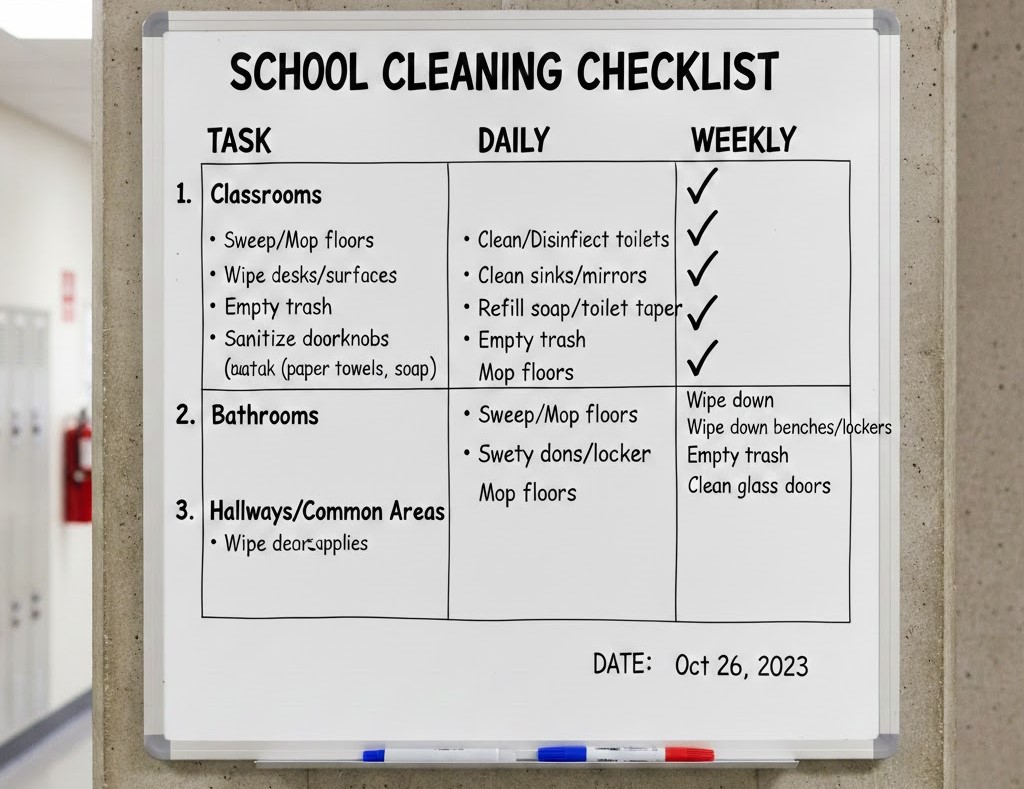
Cleaning and hygienicity of the school environment is critical in safeguarding the health of students, enhancing the productivity of workers, and providing environments in which learning is possible. The schools themselves are busy places where germs can be easily transmitted on shared surfaces, close contacts and between classrooms and shared space. Bacteria, viruses and allergens can easily build up without a well-organized method of cleaning which means more absenteeism and health hazards.
This guide provides a comprehensive school cleaning checklist designed to support administrators, facility managers, janitorial staff, and professional cleaning providers. By breaking down tasks by area and frequency, schools can maintain safer, cleaner environments while improving efficiency and accountability across their cleaning operations.
Why a Structured School Cleaning Checklist Is Essential
The use of a structured cleaning checklist is essential in the area of consistency and accountability of a school facility. In the absence of a written system, the cleaning habits may become imbalanced among themselves, as certain points might be excessively covered whereas others will be completely neglected. A checklist makes sure that the spaces are kept in the same standard, irrespective of change in staff, shift rotation and size of the building.
Cleaning checklist helps to manage time and train workforce better operationally. The expectations can be easily learned by new employees, and the supervisors can make checklists to check and control the quality. It also aids in meeting health regulations, documentation can also be used to show evidence of cleanliness during inspection or audit.
Finally, an organized school cleaning checklist enhances the area of cleanliness, minimizes health hazards, and promotes the safer learning environment of students and teachers as well as visitors.
General School Cleaning Best Practices
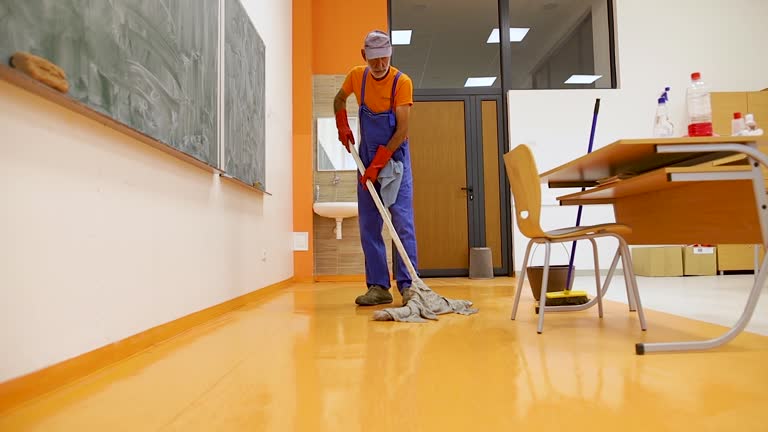
The first stage of cleaning schools successfully is to comprehend the best practices that contribute to safety, efficacy, and hygiene. Among the most significant differences, cleaning, sanitization, and disinfection need to be mentioned. Cleaning, sanitizing and disinfecting eliminate dirt and bacteria, bacteria and viruses and pathogens respectively. A school would require all of the three steps particularly in the high traffic areas.
Cleaning vs. Sanitizing vs. Disinfecting
- Cleaning removes visible dirt and debris.
- Sanitizing reduces germs to safe levels.
- Disinfecting kills most bacteria and viruses on surfaces.
Effective school cleaning programs use all three methods strategically.
Recommended Cleaning Frequencies
- Daily: High-touch surfaces, restrooms, trash removal
- Weekly: Floor deep cleaning, dusting, equipment sanitation
- Monthly/Seasonal: Carpet extraction, air vent cleaning, window washing
Safety and Product Guidelines
- Use child-safe, EPA-approved disinfectants
- Follow proper dilution and dwell times
- Implement color-coded microfiber systems to prevent cross-contamination
- Ensure staff wear appropriate PPE such as gloves and masks when needed
- Maintain proper ventilation during cleaning activities
By following these general best practices, schools can create safer, more effective cleaning systems that support long-term facility health.
Classroom Cleaning Checklist
The core of any school is the classroom and it should be clean, properly cleaned and cleaned on a regular basis to ensure that there is a healthy learning environment. Since students are in close contact most of their time of the day (taking several hours), surfaces can soon be harboring germs and allergens. An organized classroom clean up program can facilitate the minimization of the aircraft of illness and maintain classroom resources and furniture.
Daily Classroom Cleaning Tasks
Daily tasks should focus on high-touch and frequently used surfaces. Trash and recycling bins must be emptied to prevent odors and pest issues. Desks, tables, and chairs should be wiped down and disinfected, especially in younger classrooms where hand hygiene may be inconsistent.
- Empty trash and recycling bins
- Disinfect desks, tables, chairs, and shared surfaces
- Clean door handles, light switches, and cabinet pulls
- Wipe down whiteboards and marker trays
- Sweep and mop hard floors or vacuum carpeted areas
Weekly Classroom Cleaning Tasks
Weekly cleaning involves deeper care, including detailed floor cleaning, dusting shelves, cleaning whiteboards and smart boards, and disinfecting shared learning tools. This helps maintain air quality and prevents buildup that daily cleaning may miss.
- Deep clean floors with scrubbing or carpet extraction
- Dust shelves, storage units, and window sills
- Disinfect shared supplies such as bins, manipulatives, and electronics
- Clean classroom sinks and countertops
Monthly and Seasonal Classroom Cleaning
Monthly tasks include window cleaning, vent dusting, upholstery care, and inspections for spills, mold, or maintenance issues. These efforts preserve classroom conditions and support long-term facility upkeep.
- Wash interior windows and clean window tracks
- Clean air vents and replace filters if applicable
- Spot clean walls and doors
- Inspect for mold, water damage, or maintenance issues
Restroom Cleaning Checklist
School restrooms require the highest level of sanitation due to constant use and direct exposure to bacteria and bodily fluids. Proper restroom cleaning protects student health, prevents odors, and supports compliance with hygiene standards.
Daily Restroom Cleaning Tasks
Daily restroom cleaning includes disinfecting toilets, urinals, sinks, and countertops. Soap dispensers, paper towels, and toilet paper must be restocked regularly to encourage proper handwashing. Mirrors, partitions, and door surfaces should be wiped clean, and floors must be mopped using disinfectant solutions. Trash and sanitary bins should be emptied daily to prevent contamination and odors.
High-Touch Disinfection Areas
Flush handles, faucet handles, stall locks, hand dryers, and dispensers are some of the most frequently touched surfaces in a school. These areas require extra attention during every cleaning cycle to reduce germ transmission.
Weekly Deep Cleaning and Odor Control
Weekly deep cleaning involves descaling fixtures, scrubbing grout lines, cleaning drains, and polishing stainless steel. Enzymatic cleaners and proper ventilation help control odors and maintain a fresh restroom environment.
Common Areas Cleaning Checklist
Common areas experience heavy foot traffic and frequent use throughout the school day. These spaces must remain clean and safe to support student movement, social interaction, and daily operations.
Hallways and Corridors
Hallways should be swept and mopped daily to remove dirt tracked in from classrooms and outdoor areas. Walls, lockers, handrails, and door handles must be spot cleaned and disinfected regularly to prevent visible wear and germ buildup.
Cafeterias and Dining Areas
Cafeterias require strict sanitation due to food exposure. Tables, chairs, and serving lines must be cleaned and sanitized after each meal period. Floors should be scrubbed to remove grease, spills, and food debris that can cause slips or attract pests.
Gyms, Auditoriums, and Libraries
Shared seating, equipment, podiums, and railings should be disinfected frequently. Flooring must be maintained based on surface type to preserve safety and appearance.
Offices and Staff Areas
Staff rooms, nurse stations, and offices require disinfecting desks, phones, appliances, and shared equipment to support employee health and productivity.
High-Touch Surface Cleaning Across the School
High-touch surfaces are among the most critical cleaning priorities in any school environment. These surfaces are touched repeatedly by multiple individuals throughout the day, making them prime locations for germ transmission. Even when floors and visible areas appear clean, neglected high-touch points can undermine overall sanitation efforts.
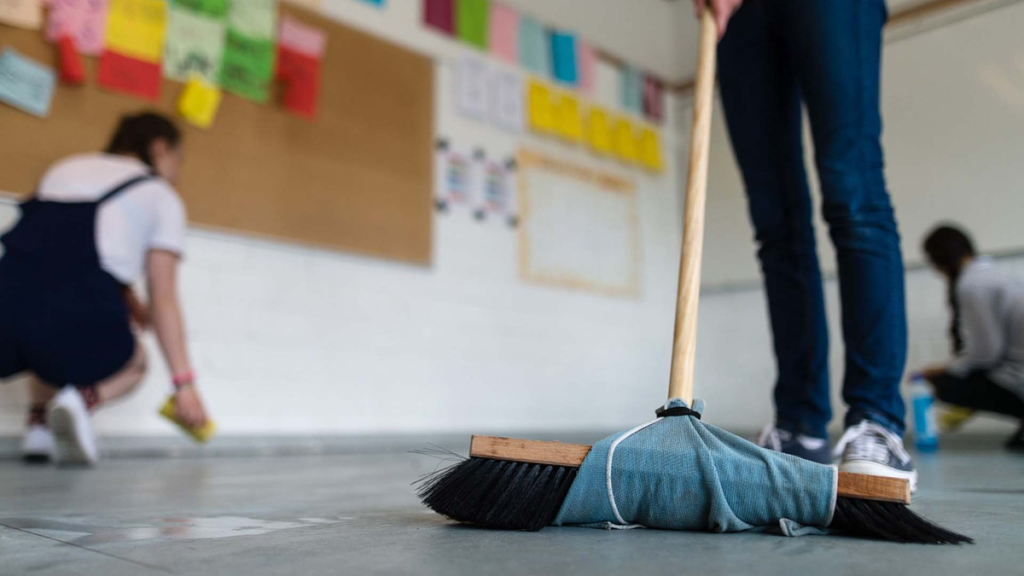
Common high-touch surfaces include door handles, push plates, light switches, elevator buttons, stair railings, water fountains, bottle fillers, shared computers, tablets, and vending machines. In classrooms, desk edges, chair backs, and supply bins are frequently touched and should be disinfected regularly. Restrooms add another layer of risk with faucet handles, flush valves, and dispenser buttons.
Cleaning teams should incorporate high-touch surface disinfection into daily routines using appropriate disinfectants with adequate dwell time. Visual reminders and checklists help ensure these areas are not overlooked during busy cleaning shifts. By focusing on high-touch surfaces, schools significantly reduce the spread of illness and maintain a safer environment for students and staff.
Equipment and Supplies Needed for School Cleaning
Proper equipment and supplies are essential for effective school cleaning. Commercial-grade vacuums, floor scrubbers, and microfiber tools improve efficiency and cleaning outcomes compared to household equipment. Disinfectant sprayers and electrostatic systems help ensure even coverage in large spaces.
Cleaning chemicals must be properly labeled, stored securely, and selected based on surface compatibility and safety standards. Routine equipment maintenance ensures reliability and prevents downtime during critical cleaning periods.
Essential tools include:
- Commercial vacuums and floor scrubbers
- Microfiber mops and cloths
- Disinfectant sprayers or electrostatic systems
- Labeled chemical storage cabinets
- Equipment maintenance logs
Having the right tools enables cleaning teams to work safely, efficiently, and consistently across all school areas.
Benefits of Professional School Cleaning Services
Professional school cleaning services bring expertise, advanced equipment, and consistent staffing. They help schools maintain high sanitation standards while reducing administrative burden and liability. Outsourcing can be cost-effective and reliable, especially for large facilities.
Advantages include:
- Expertise in educational environments
- Access to commercial equipment and products
- Consistent staffing and supervision
- Reduced administrative burden and liability
Conclusion
A detailed school cleaning checklist is essential for creating safe, healthy, and productive learning environments. By following structured routines for classrooms, restrooms, and common areas, schools can reduce health risks, improve facility conditions, and support student success. Consistency, training, and proactive maintenance are key to long-term cleanliness and compliance.
Whether managed in-house or through professional services, a well-implemented school cleaning program protects students, staff, and the community as a whole.